What If Seaweed Did Not Need the Sea?
2026-07-06
Inside OceanBites’ Vision for Scalable Dulse Production
Rather than starting with a specific species or product, OceanBites began with a broad exploration of the sector. The team analysed different seaweed species, cultivation methods and markets before making strategic decisions.
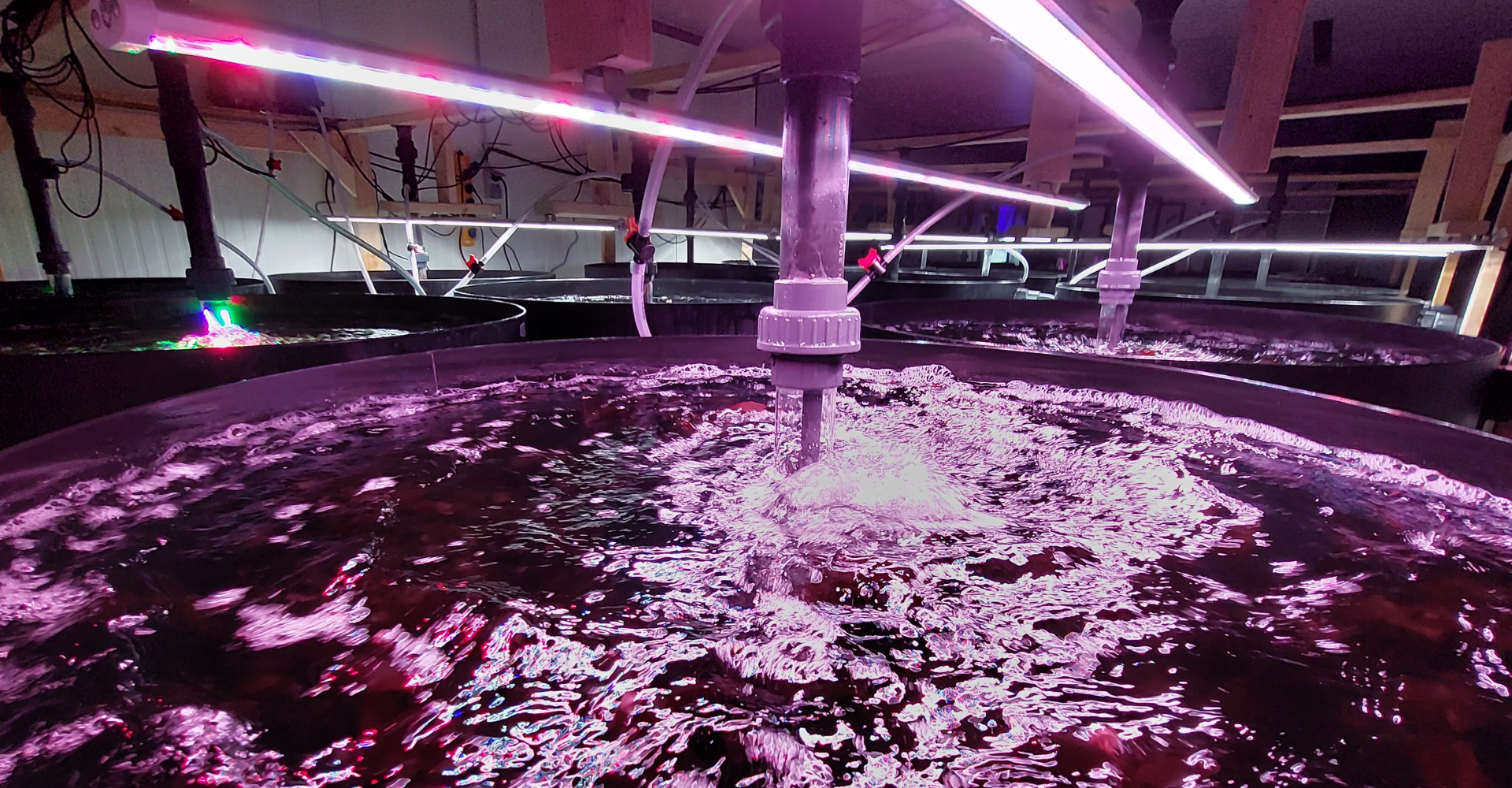
This led to a clear conclusion. To supply the food sector with a fresh and reliable product, full control over the production environment was essential. The result is a closed cultivation system in which light, temperature and water conditions are carefully managed. This allows OceanBites to standardise quality and output, independent of weather or seasonal fluctuations.
“We wanted to create a system where we always know what we are harvesting,” says Sander. “Not something that depends on seasonal changes or whether you can go out to sea.”
In the long term, OceanBites aims to enable local seaweed production anywhere, anyplace, anytime in the world, regardless of climate or proximity to the ocean.
A long road to performance
While the concept may sound straightforward, the reality proved more complex. The initial plan to translate academic knowledge into a working system was not sufficient for industrial scale operations.
“The first system required a lot of manual work, many adjustments and was not efficient enough,” Steenacker explains. “We had to decide whether to stop or build something ourselves.”
OceanBites chose to continue. Over the past three years, the company focused on research and development, redesigning its system from the ground up. Drawing inspiration from aquaculture and engineering, the team developed a more efficient and automated solution.
A new system has now been deployed, marking the transition from experimentation to scaling.
Why dulse
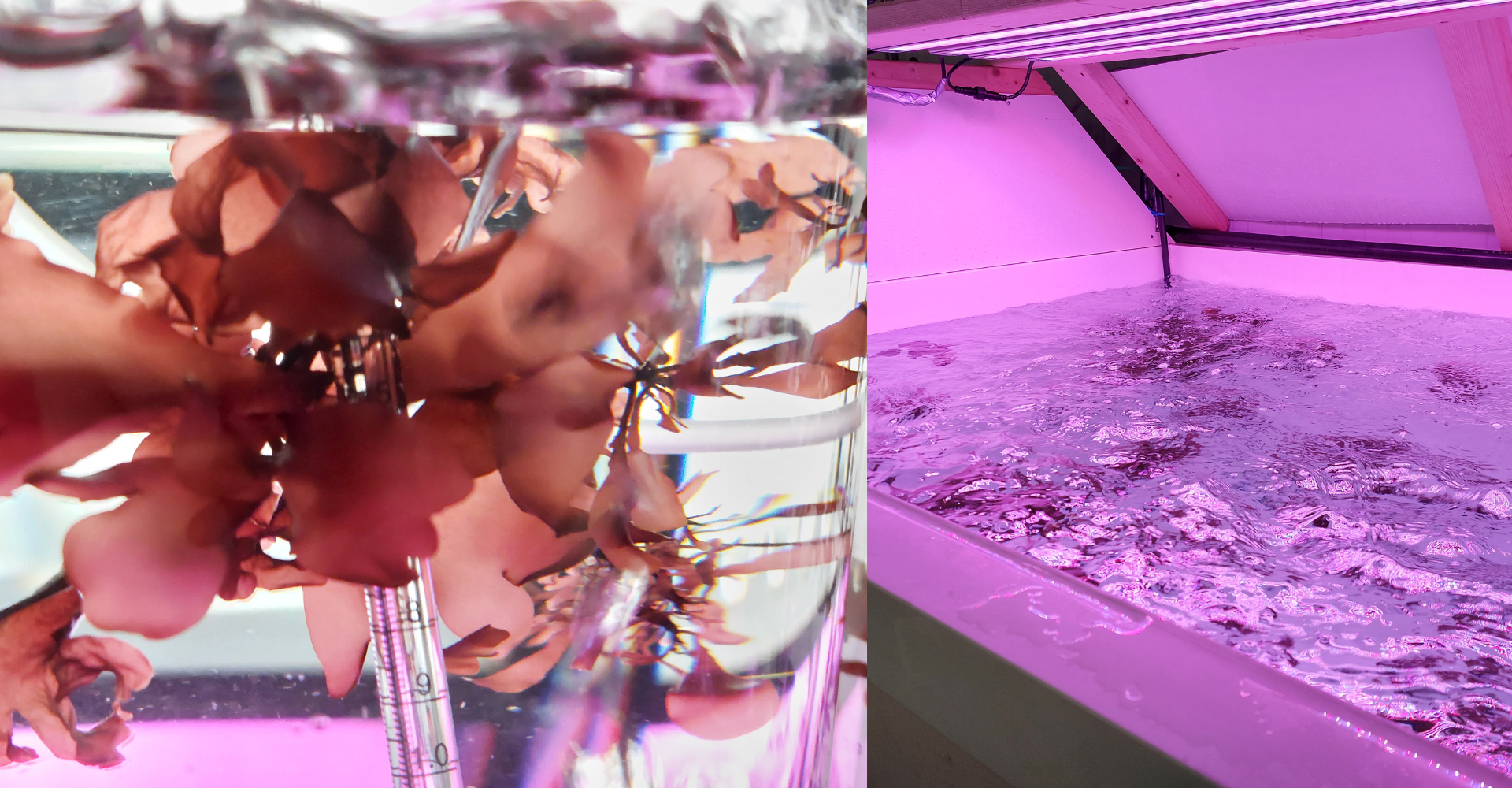
The choice for dulse was deliberate. From a list of permitted edible seaweed species in Europe, OceanBites narrowed its focus based on feasibility and market potential.
Several species were tested. Some proved unstable, others unsuitable. Dulse showed strong early results.
“It performed well in our setup and there is already a clear demand from the food sector,” says Sander.
Today, OceanBites supplies fresh dulse primarily to distributors and processors. While the company initially targeted horeca directly, it found that working through intermediaries offered a more scalable route to market.
A market in transition
Over the past few years, Sander has observed a clear shift in perception.
“Five years ago, people did not really know what to do with it,” he recalls. “Now we see genuine interest from large companies, chefs and product developers.”
Applications range from culinary uses to functional ingredients such as salt reduction. This growing interest is encouraging, but it also brings challenges. One of the most pressing is pricing. While demand is increasing, expectations do not always match production realities.
“There is interest, but not always at a viable price point,” Sander notes.
Scaling with purpose
Looking ahead, 2026 marks a important year. OceanBites is moving from development to production, targeting several tonnes of dulse per year.
Its modular system allows for gradual expansion, with additional units added as demand grows. Rather than one large facility, OceanBites envisions a network of smaller production sites close to end markets.
“The idea is to produce locally where the demand is,” Sander explains.
Challenges and collaboration
Despite progress, several challenges remain. One of the most critical is the availability of clean starting material, as contamination can have significant consequences. But also the difference in legal framework across EU countries. Thanksfully there is a lot of goodwill and people putting in effort to make this more homogeneous.
At the same time, OceanBites is actively seeking collaboration with research institutions and partners across the value chain. They are looking into new species, product development and research projects.
As the seaweed sector evolves, OceanBites represents a new generation of companies focused on scalable, local production.
“We are still early,” Sander concludes. “But the direction is clear.”
Want to know more about OceanBites? Visit their website


