Rovensa Next: using seaweed for resilient agriculture
2026-01-08
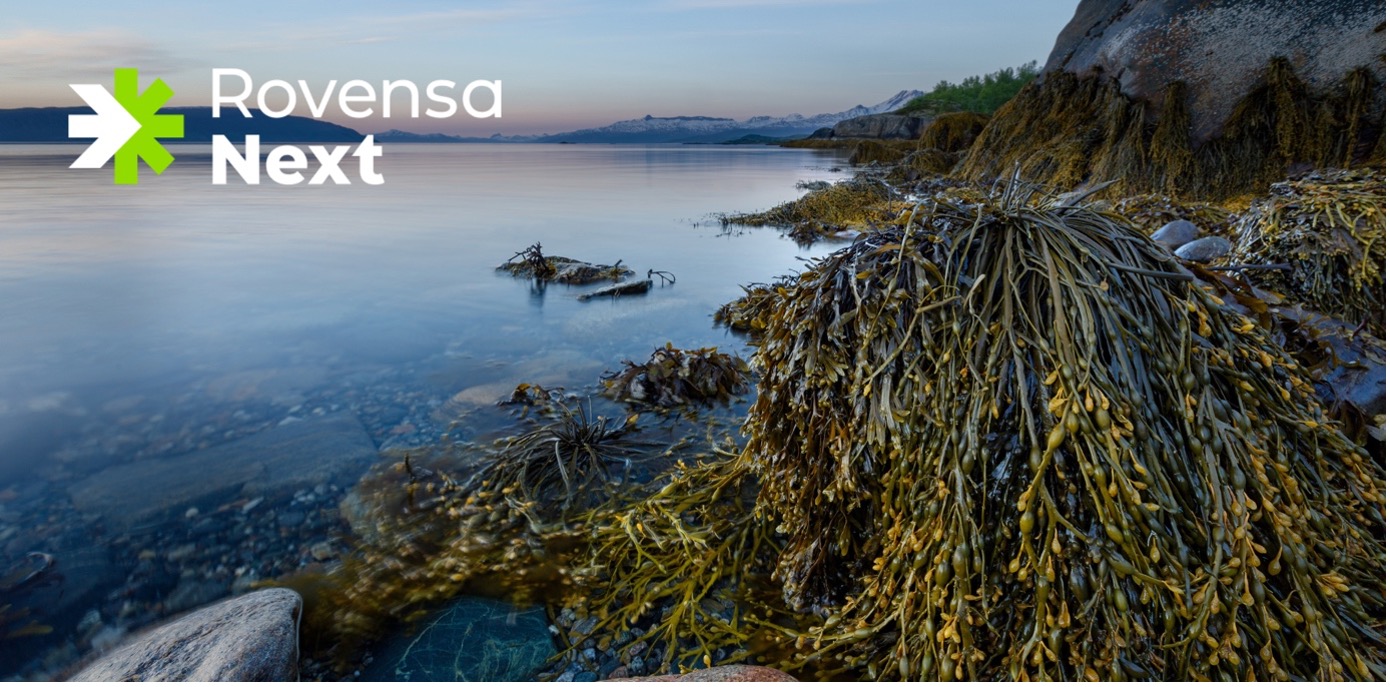
Rovensa Next, the global leader in biosolutions for agriculture, is the result of the integration of twelve pioneering sustainable companies with decades of successful track records in biosolutions. Regarding to seaweed activities, Rovensa Next has a long trajectory in harvesting and processing Ascophyllum nodosum in the north of Ireland.
Camila Levy, Global Agronomical R&D Manager, explained how this journey evolved from two of the founder companies, Tradecorp, and OGT, to become Rovensa Next, with the broadest biosolutions portfolio in the industry, including biostimulants, biofertilizers, bionutrition, biocontrol, and adjuvants. The company, is supported by 65 years of experience building on innovative technologies and farming practices, providing growers with holistic solutions to increase profitability, boost yields and maximize performance.
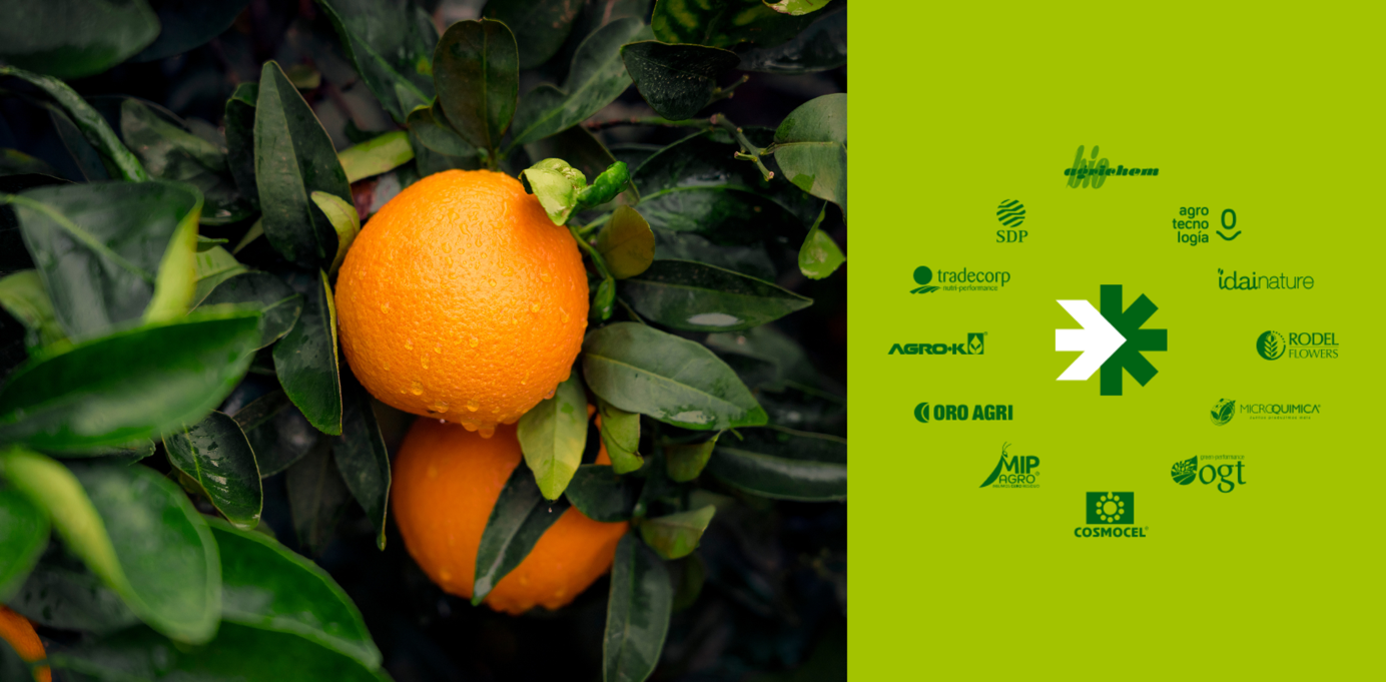
The twelve companies that operate together under the Rovensa Next brand.
Today all products are sold under the Rovensa Next brand, while the historic product names remain in use. Seaweed plays an important role in this portfolio, mainly under the Phylgreen brand name. Seaweed based biostimulants are mainly used to help plants handle abiotic stress and to improve quality traits. According to Camila, their extract works especially well when applied before stress events such as heat or drought. It prepares the plants so that they maintain growth and quality during difficult periods. This priming effect has been the focus of extensive research within the company. It has taken many years to understand how to position the products correctly and how to explain their value to growers, particularly at a time when seaweed was better known for cosmetics than for farming.
Responsible harvesting and fresh extraction in Ireland
Ascophyllum nodosum is harvested along the west coast of Ireland, where the species grows in intertidal zones and naturally endures alternating periods under and above water. This makes this seaweed naturally resilient to stress. The biomass is always processed fresh, which is rare in the market, the extraction process is gentle and physical rather than thermal. The factory never exceeds about 27 degrees Celsius during processing. This preserves the natural compounds that make the extract so effective as a biostimulant.
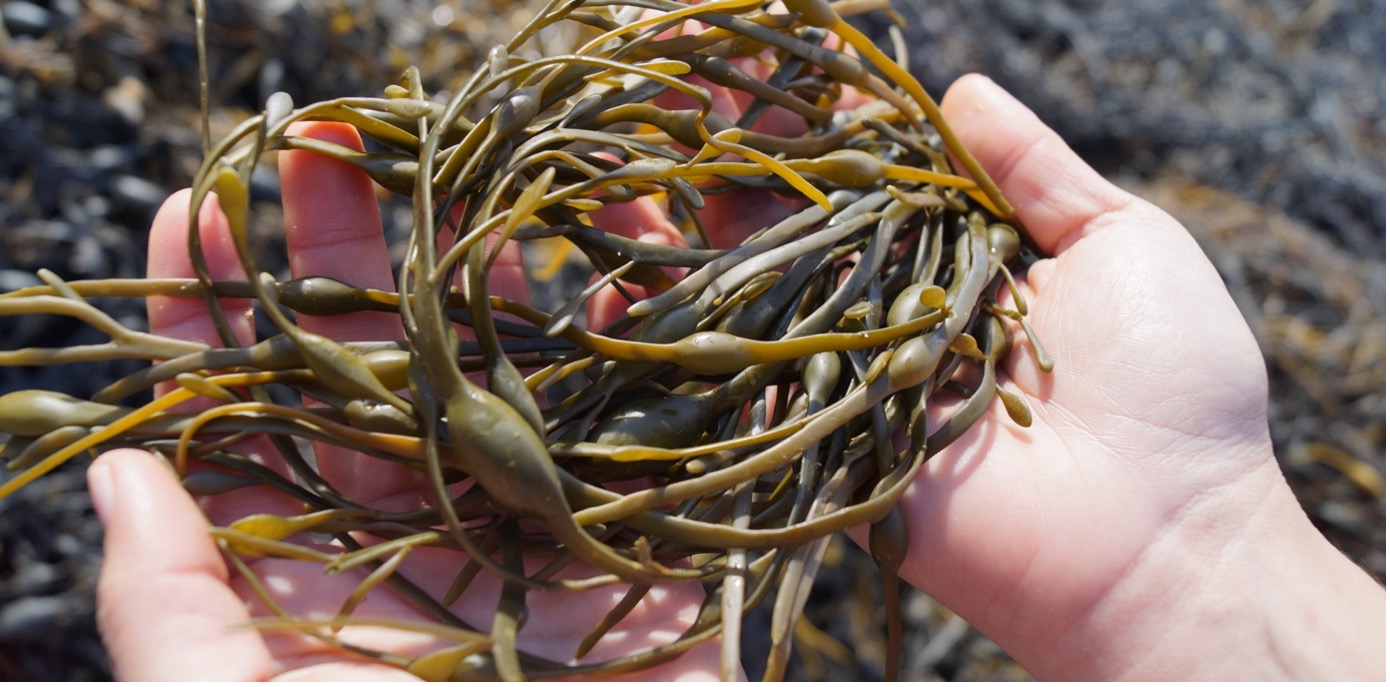
Ascophyllum nodosum, sourced from areas near Donegal, Ireland.
The extraction team in Ireland processed 3,913,340 kg of fresh seaweed in 2024 and from this produced 961,000 litres of biostimulants and 780,000 kg of animal feed. All harvesting is carried out by hand, with strict rotation of cutting areas and always leaving enough of the plant in situ so that the seaweed can regrow effectively. This sustainable approach ensures the harvest will continue for many years to come. However, the harvesting community is ageing, the exodus of young people from rural coastal communities and competition from other sectors affects raw material supply and availability. Camila sees these realities as a growing challenge for long term supply.
Camila estimates that the company now offers around forty separate formulations that contain Ascophyllum extract, often combined with nutrients such as amino acids, calcium, boron or molybdenum. All of these products are designed for agriculture.
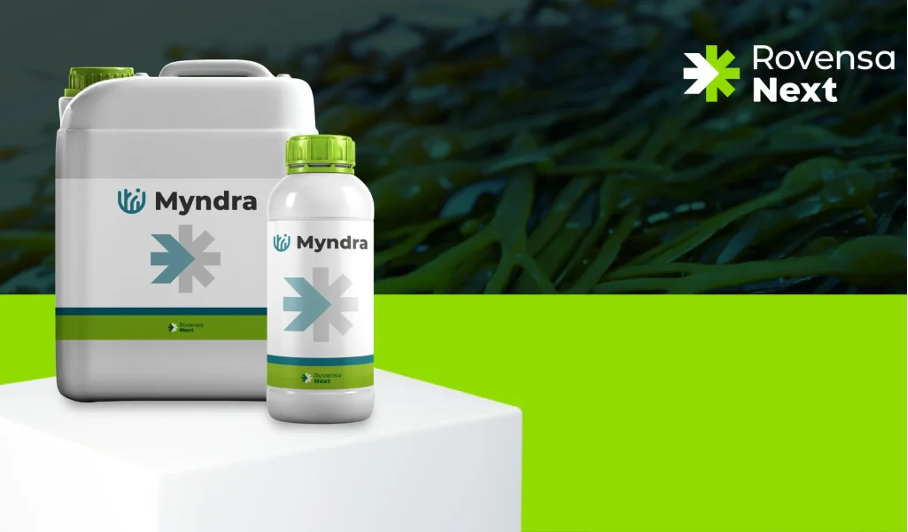
Myndra is one of Rovensa Next’s formulations containing Ascophyllum extract. It is a new synergistic biostimulant to elevate fruit quality in woody perennials in Europe.
Challenges faced by Rovensa Next
The harvesting community is ageing and competition from other sectors, especially cosmetics, affects raw material prices. Camila sees these realities as a growing challenge for long term supply. For that reason, Rovensa Next is increasingly interested in learning more about cultivated seaweed and alternative species. The wild harvest has served them well for more than fifteen years, but the future requires innovative new options.
Why join the ESWA network?
Joining the European Seaweed Association helps the company access knowledge on cultivated seaweed, meet new partners and explore what might be possible in the coming years.
At the same time Rovensa Next contributes practical experience to the ESWA Network. The company has spent more than 15 years working with raw seaweed biomass, developing consistent extraction methods and bringing products to market through established regulatory pathways. Their experience can be valuable for younger companies that are still searching for the right route to market. The company hopes to learn more about the cultivated side of the sector, while offering their own expertise on how seaweed extracts can be developed into trusted solutions for farmers.
Reach out to Rovensa Next


