From runway to real world: how Kelptex is turning seaweed into a new material category
2026-07-13
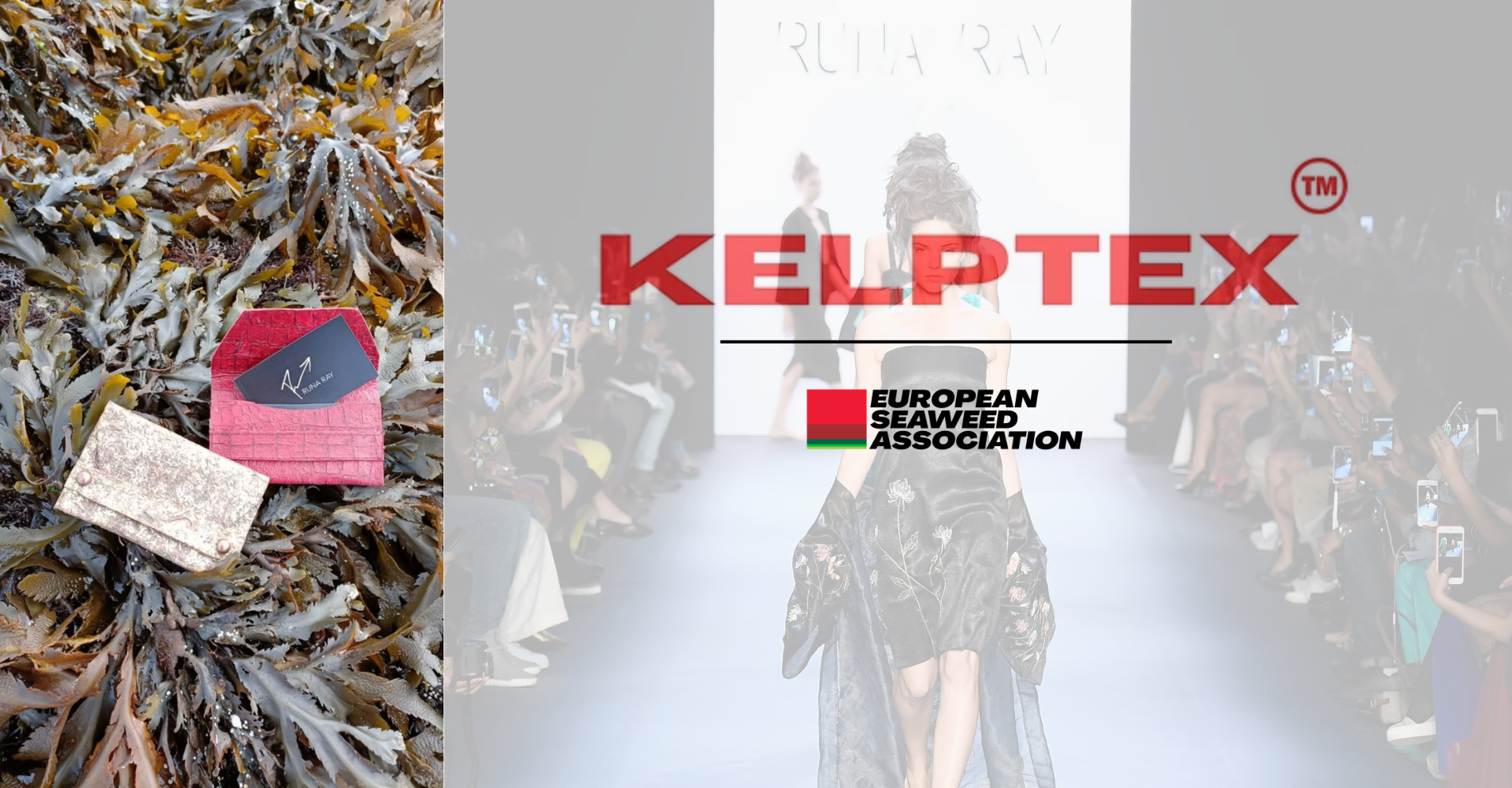
In an industry built on spectacle, where materials are often hidden behind aesthetics, Runa Ray is doing the opposite. On runways and even on screen, her work does not just attract attention, it raises questions. What if fashion started with the material, not the design?
With Kelptex, Ray is turning that idea into something tangible, using seaweed to create a new class of biomaterials that move from concept pieces into real world applications.
A designer who started with the problem
Ray’s journey into seaweed did not begin in the ocean, but in the realities of the fashion industry. With a background in design and roots in a manufacturing family, she understood early on how materials are made and where the system breaks down.
“I grew up in factories,” she explains. That experience shaped her approach to innovation, not only as a designer, but as someone who understands production from the inside.
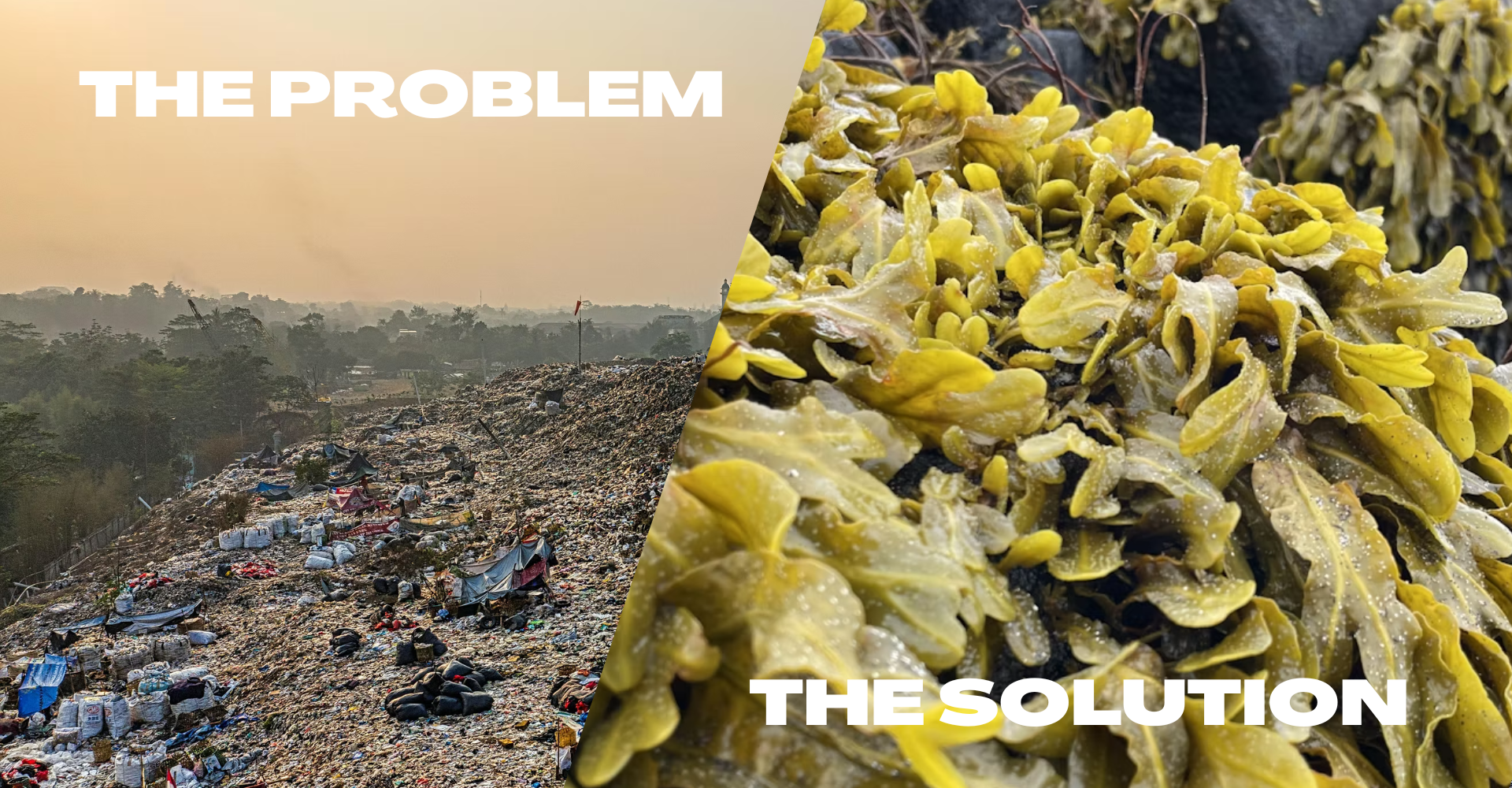
Her first experiments with seaweed focused on reducing water use and pollution in textile dyeing. Over time, however, she realised that improving existing processes was not enough. The industry needed a fundamentally different starting point.
“I realised we needed a material that is truly regenerative.”
That thinking led to Kelptex, a company founded in 2024 and headquartered in California. At its core, Kelptex is not a fashion label, but a material company.
From seaweed to material platform
Kelptex has developed a patented process to transform seaweed into a durable and versatile biomaterial. The material can be used across several industries, from fashion and accessories to packaging and interior design.
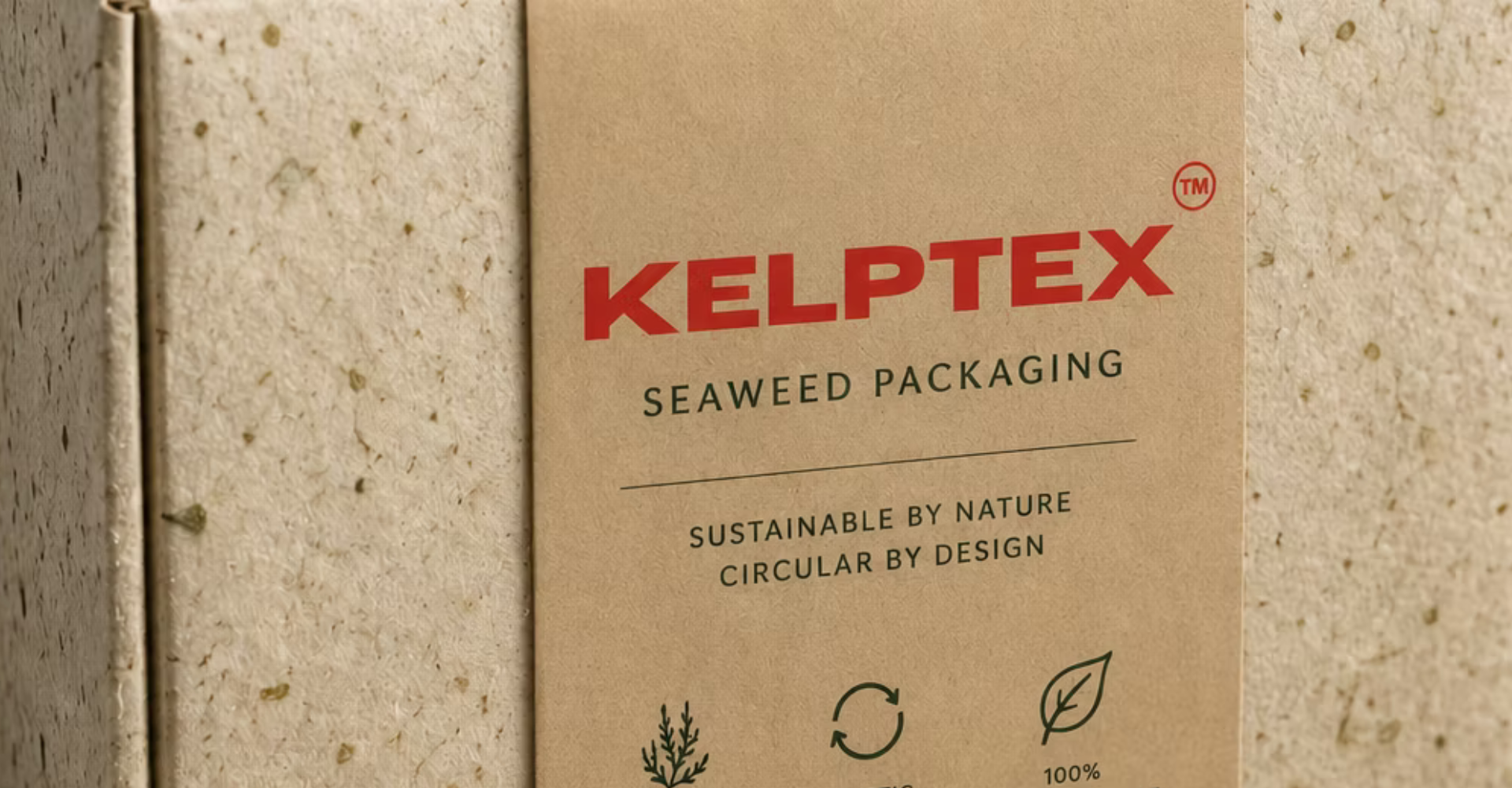
The production process is designed to minimise environmental impact from the start. It uses very little water, avoids chemicals and allows water to be reused. According to Ray, this means there is no wastewater and no need for freshwater inputs.
The material also avoids one of the main problems found in many alternatives to leather or synthetics.
“There are no plastic coatings and no microplastics,” she says.
Even at the end of its life, the material is designed with circularity in mind. It can be repurposed or reprocessed into new products, reducing the waste streams associated with conventional textiles.
Fashion as a gateway, not the end market

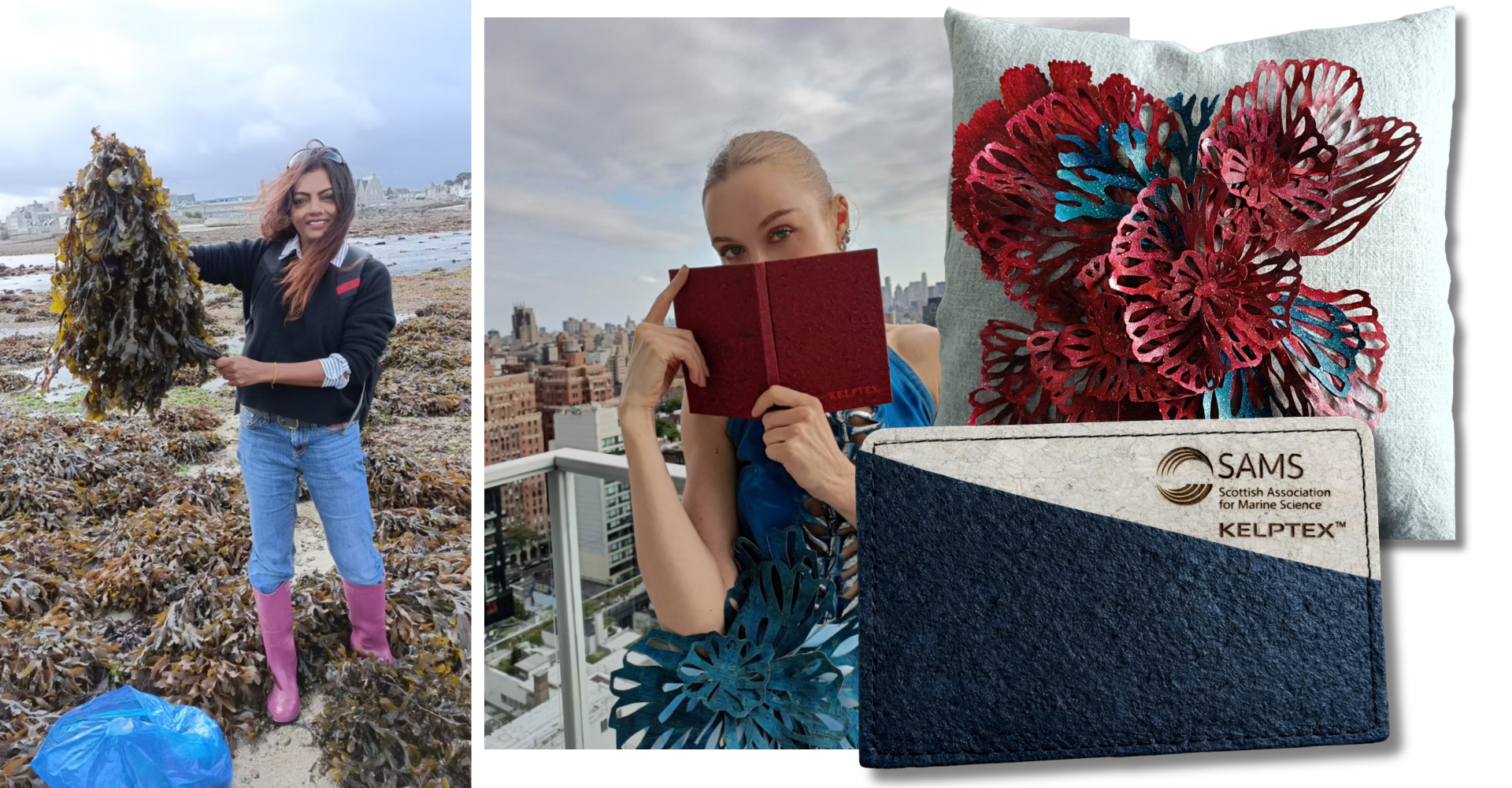
At first glance, Kelptex may appear as a fashion innovation. Ray’s work has been showcased on international runways and even featured in film productions, where seaweed based garments serve as striking visual statements.
Yet these pieces are not intended as end products.
“What you see on the runway is a conversation starter,” she explains.

By creating bold, unconventional designs, she draws attention to the material itself. Once curiosity is sparked, the conversation shifts towards real world applications.
This strategy has proven effective. Today, Kelptex materials are being used not only in garments, but also in accessories such as wallets and luggage tags, as well as in interior applications like wall cladding.
Early traction beyond fashion
While fashion creates visibility, the first commercial traction is emerging in events and corporate gifting. For companies looking to move away from plastic or leather based promotional products, Kelptex offers a material that is distinctive, practical and easy to explain.
The business model reflects this flexibility. Kelptex supplies sheets that can be used by manufacturers, designers and craftsmen, while also producing finished products on demand for specific clients.
Scaling in a developing system
As with many innovations in the seaweed sector, scaling is not just a production challenge. Supply, demand and awareness need to grow together.
“If there is demand, farmers will grow the seaweed,” Ray says. “But to create demand, we first need to educate people.”
Kelptex is now raising seed funding to build manufacturing capacity and meet growing demand. The company already has proof of concept, early market traction and demonstrated applications.
For Ray, the ambition is not to compete directly with leather, synthetics or existing materials. It is to reduce the waste and pollution they create.
In that sense, Kelptex is not only introducing a new material. It is asking a bigger question about what the future of materials could look like when regeneration becomes the starting point.