Building the missing link between seaweed farming and biomaterials
2026-05-01

When Kristoffer Singstad and his co-founder Anders Skilbred started what would become one of Norway's largest solar power companies, they were already watching another sector with interest. Back in 2015, while scaling the venture that would later become Sunday Power – a major player in Norway’s solar power industry – they were closely following developments in seaweed. The environmental potential was clear. The business case, however, was not yet ready.
“We always knew we wanted to build something in seaweed,” Kristoffer explains. “But the timing had to be right.”
After a partial exit from their solar venture in 2023, they turned their full attention to the opportunity they had been observing for years. SEAnnovation was founded with a clear objective: strengthen the economic foundations of the European seaweed industry.
Closing the value chain gap
With a view from the outside, one structural problem stood out. Seaweed farmers were producing high quality biomass, yet many struggled to generate stable margins. At the same time, a growing number of companies were developing seaweed-based materials, from foams and textiles to alternative plastics. What was missing was the refining step in between.
“You cannot simply take raw seaweed and turn it into advanced materials,” Kristoffer says. “You need to extract and refine the functional polymers. That was the gap we saw.”
SEAnnovation AS positioned itself precisely there. The company purchases cultivated European brown seaweed and extracts high value polymers tailored to industrial applications.
Making extraction viable
When SEAnnovation began developing its processes, the dominant view was sceptical. Extracting polymers from cultivated European seaweed was widely considered too expensive. Yields were believed to be too low, and conventional extraction often relied on harmful chemicals or high energy inputs.
The team chose to challenge that assumption.
Through extensive research and development, scaling from laboratory work to pilot systems and now industrial production lines, SEAnnovation developed proprietary extraction protocols designed to be both cost efficient and environmentally responsible.
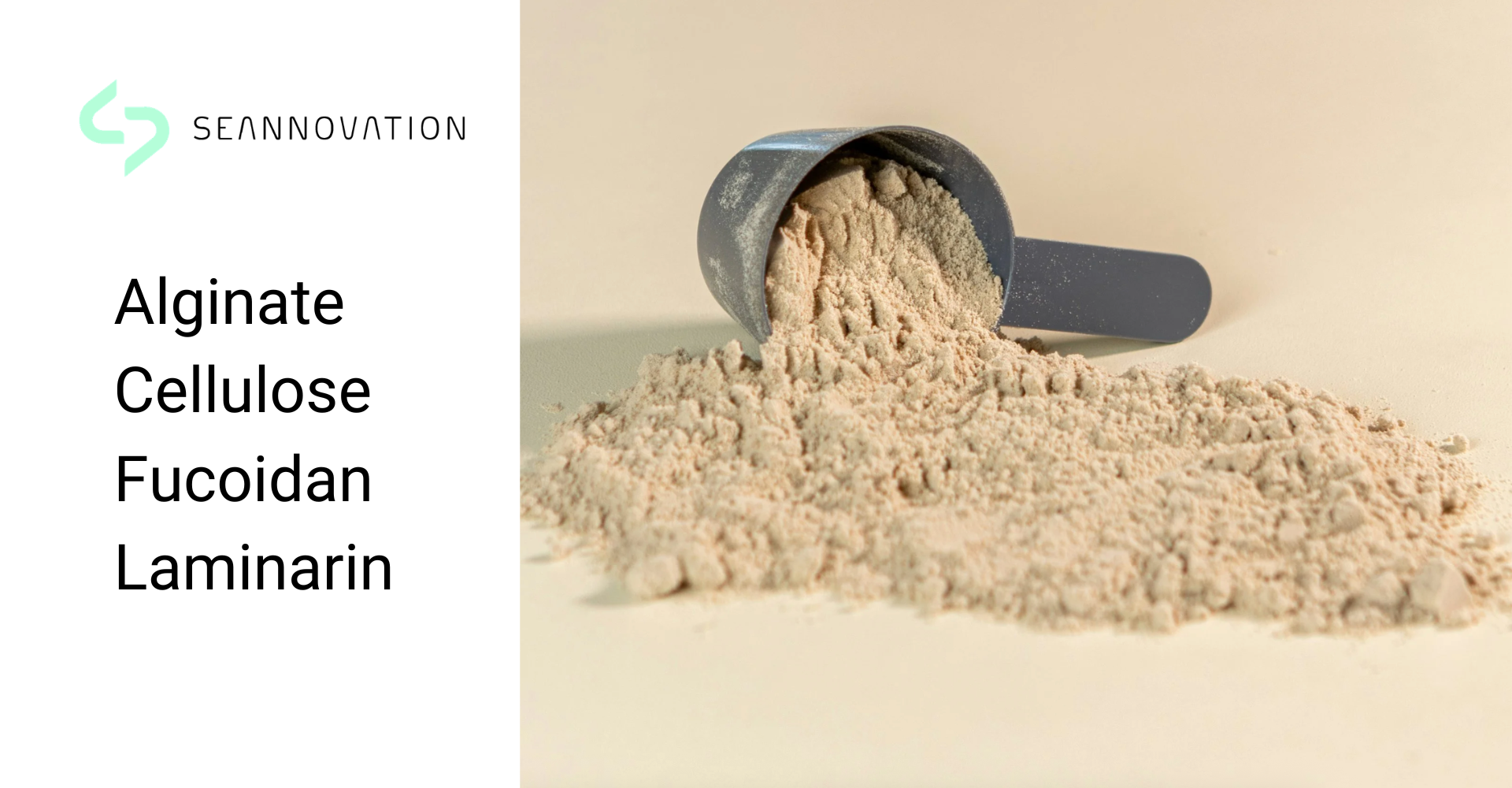
The company focuses on brown seaweed species such as sugar kelp and extracts three main polymers: alginate, cellulose and fucoidan. These are supplied as powders or liquids, depending on customer requirements. Crucially, the process avoids harmful chemicals and uses the entire biomass stream. Nothing is discarded.
“We wanted to build something that is genuinely sustainable. Not just in theory, but in practice.”
From biomass to materials
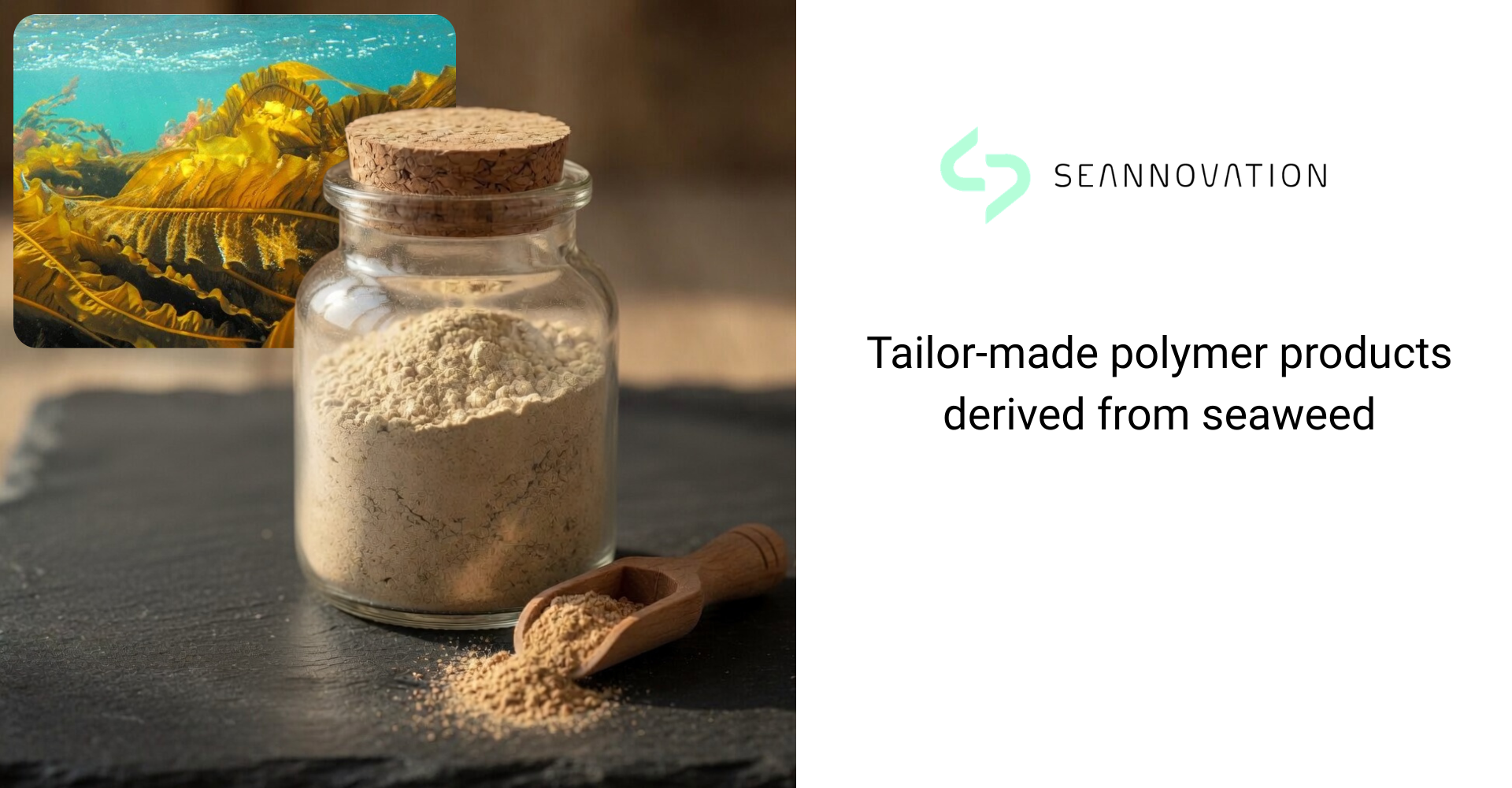
SEAnnovation does not manufacture finished plastic products. Instead, it supplies the functional building blocks. Alginate is already widely used in food and medical applications, while cellulose and tailored polymer blends are increasingly used in biomaterials and alternative plastics. Fucoidan, with emerging research into anti-inflammatory and other bioactive properties, represents an additional high value stream.
The company’s strategic focus lies in supporting material innovators developing next generation products. By tailoring polymer characteristics to very specific needs, SEAnnovation aims to move beyond commodity ingredients and towards high performance material solutions.
Scaling in Europe
A facility in Lithuania is operational, and a Norwegian production line is expected to begin pilot production using the 2026 harvest season. Within five years, Kristoffer expects to see tens of thousands of tonnes of cultivated seaweed produced across Northern Europe, supported by decentralised biorefineries located close to farming clusters.
The coordination challenge
For SEAnnovation, the main bottleneck in the sector is not technology. It is alignment.
Each player in the value chain depends on the next. Polymer buyers require volume commitments. SEAnnovation needs predictable biomass supply. Farmers need secure off take agreements to access finance and scale.
“Everyone is waiting for the next player to sign first,”
Bringing farmers, refiners, material innovators and investors into structured dialogue is, in his view, the next critical step.
A growing market
SEAnnovation sees strong demand drivers ahead. Public awareness of microplastics and concerns about human health are rising. At the same time, European regulation is increasingly restricting fossil-based plastics. Certain markets, such as food grade alginate, already face supply constraints. Meanwhile, demand for credible bio-based materials continues to grow.
“What the world needs is real biodegradable plastics,” Kristoffer says. “Not greenwashing, but materials that are genuinely sustainable.”
An open invitation
SEAnnovation is actively seeking collaboration with seaweed farmers, farming clusters, biomaterial developers and companies interested in tailored polymer solutions or regional biorefineries. The founding team brings experience from building and scaling ventures outside the seaweed sector. Their approach combines commercial discipline with long term sustainability ambition.
By strengthening the link between cultivation and advanced materials, SEAnnovation is helping transform European seaweed from promising biomass into scalable industrial input. From promise to business.
Reach out to SEAnnovation AS #Seaweed #Biomaterial #BlueEconomy #Sustainability


