Sea.Sense brings European seaweed to the everyday table
2025-12-09
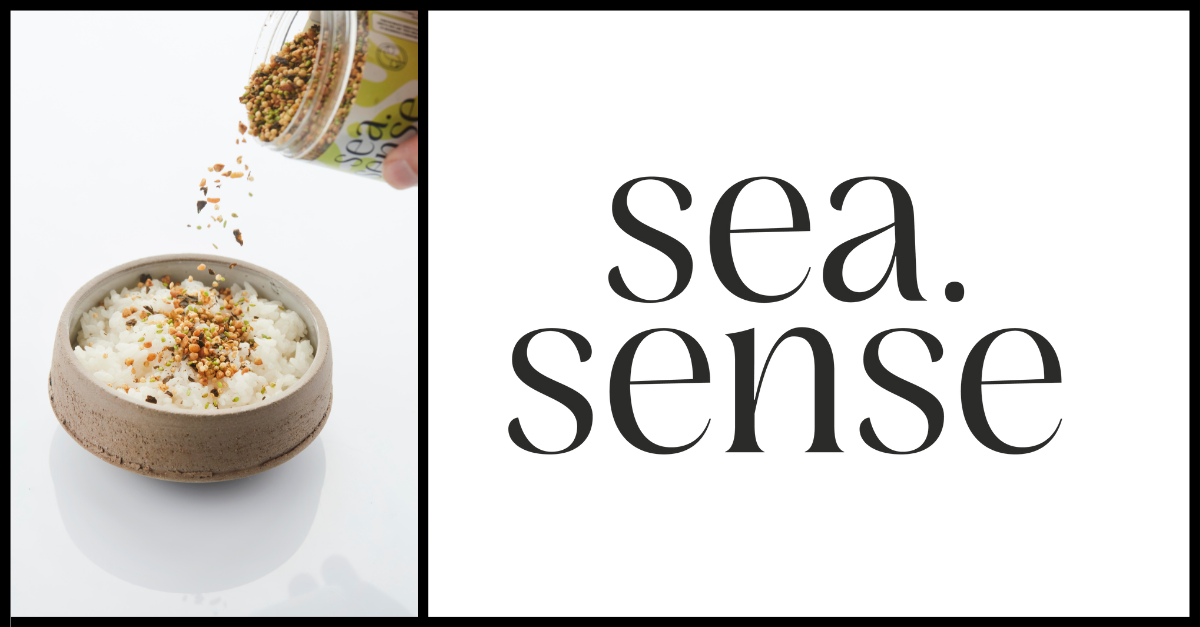
Sea.Sense is on a mission to make seaweed a commodity in the European cuisine. The brand was founded by @Alexander Jordaens, an engineer and innovation specialist by background and a seaweed believer by conviction. He began his journey into the offshore renewables industry, spending eight years working on innovative offshore renewable projects before being given the opportunity to develop a seaweed farm in Oman. This marked the start of his deep involvement in the seaweed industry, which ultimately led him back to Europe with the clear ambition of unlocking the potential of local seaweeds for mainstream consumers.
From fine dining kitchens to European consumers
The idea for Sea.Sense emerged through an unexpected yet powerful partnership. Alexander’s brother runs a fast-growing Belgian company that develops, produces and supplies sweet and salty crispy toppings to the food service industry across Europe. His culinary background and understanding of professional kitchens provided the perfect insight for Sea.Sense. Together, they identified an opportunity to reimagine furikake, a well-known Japanese seasoning widely used in Asia as an everyday flavor enhancer, but with a distinctly European identity formed with locally farmed seaweed species.
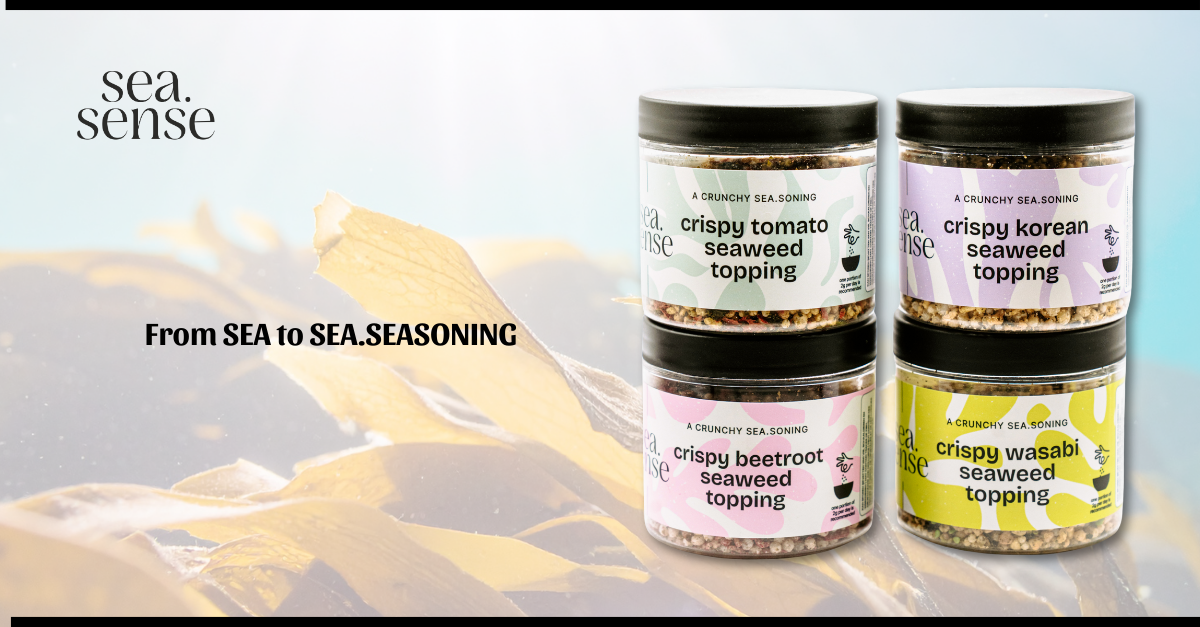
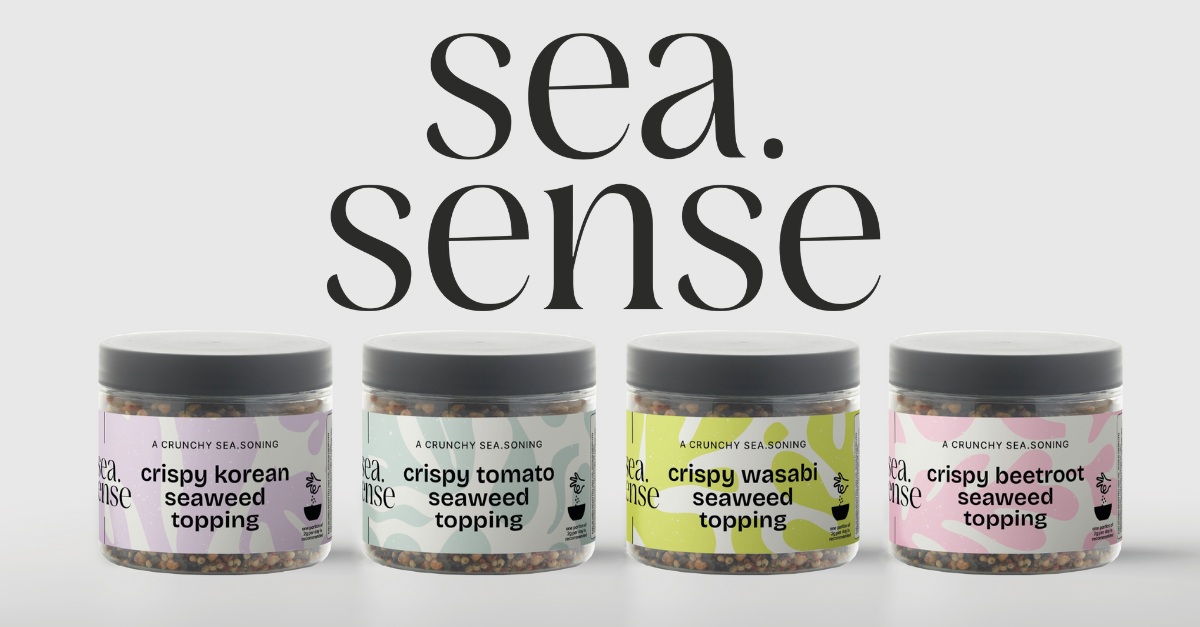
This collaboration has resulted in a range of crunchy toppings with seaweed that are intended for everyday use, rather than as a niche ingredient. Food professionals in more than fifteen countries use their products. Sea.Sense launched in the summer of 2025 and entered the market with four different toppings containing European Seaweed and applicable for every type of dish from breakfast to diner; wasabi, curry, beetroot and tomato blends.
Designed like salt and pepper, but better
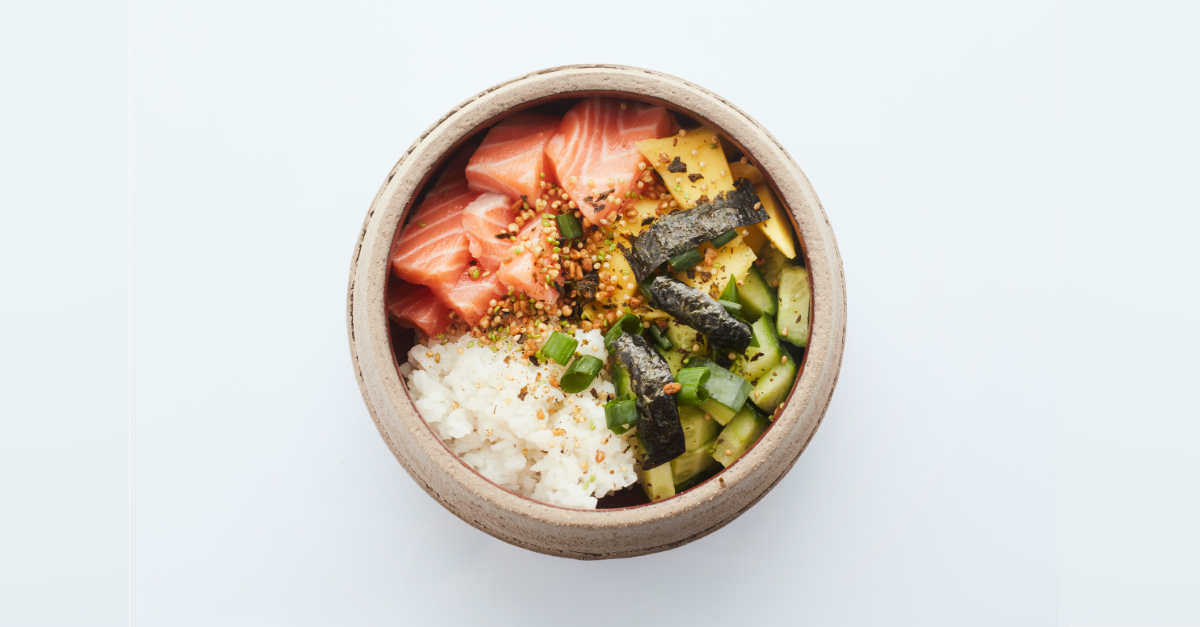
Sea.Sense’s toppings are designed to sit on the kitchen table like salt and pepper, offering an effortless way for consumers to add flavour, texture and nutrition to countless dishes. Whether it is sprinkled over burrata, added to salads, rice bowls or even to a simple frozen pizza, the aim is to make experimentation enjoyable and accessible.
Sea.Sense works primarily with Saccharina latissima, valued for its flavour profile, custom made moisture level to make it crunchy its naturally high iodine content. With three servings of topping per day consumers can reach their recommended daily iodine intake, helping to address a widespread deficiency across Europe. Gastronomy and health are closely connected in the brand’s philosophy.
Travelling around Europe for the right ingredient
To secure the right seaweed Alexander explored multiple European suppliers and eventually partnered with Nordic SeaFarm. He even travelled to Sweden to take part in the harvest and to help process Sea.Sense’s own batch. He dried two tonnes of fresh seaweed to seaweed flakes, an experience that strengthened the company’s commitment to quality and traceability. Alexander decided to set out on an adventure, one that would take him straight to the heart of the farm. He wanted to experience the harvest and processing with his own eyes and hands, to feel the rhythm of the work and understand the value chain from farm to fork. By immersing himself in the day-to-day tasks, he began to see where the real bottlenecks and challenges lay.
Sea.Sense’s production line is fully automated and capable of scaling to larger retail volumes. Carrefour Belgium is set to become its first retailer and samples have been positively received by major dutch retailers. The brand is gradually expanding from online sales into physical shops, speciality stores and towards retailers in other European countries and even beyond Among fifteen innovative food startups, sea.sense was chosen to join the From Start to Kitchen journey, placing it among a select group shaping the future of food and more exciting news is about to come.
Challenges Sea.Sense is facing in the market
Introducing a completely new category into European supermarkets comes with challenges. Sea.Sense’s products do not fit neatly into traditional retail structures. They are not ordinary spices, not simply toppings and not confined to a world cuisine section. Retailers are still determining where they should be placed on the shelves and Sea.Sense is testing this through pilots in several stores.
Market entry is the company’s most significant challenge, particularly convincing consumers to try something unfamiliar. Price sensitivity also plays a role, especially since the cost of seaweed cultivation continues to rise. Without increased demand production cannot grow and prices remain high.
Building the sector together
This is also why Sea.Sense joined the European Seaweed Association. Alexander believes strongly that consumer adoption is a missing link in the European seaweed value chain. Without sufficient demand supply cannot flourish. Sea.Sense aims to help build that bridge by offering accessible everyday products that can encourage wider consumption.
The company welcomes contact from both sides of the industry, including seaweed producers interested in supplying high quality raw materials and B2B buyers such as meal box companies and retailers who are looking for innovative flavour solutions.
Sea.Sense also participates in European accelerator programmes that offer coaching and financial support. These programmes recognise the potential of a product that can be used daily and that can introduce seaweed into a broader European diet.
With dozens of flavour possibilities available through his brother’s expertise, the potential for expansion is significant. As awareness grows Sea.Sense aims not only to strengthen its own brand but also to support the growth and maturity of the wider European seaweed sector.


